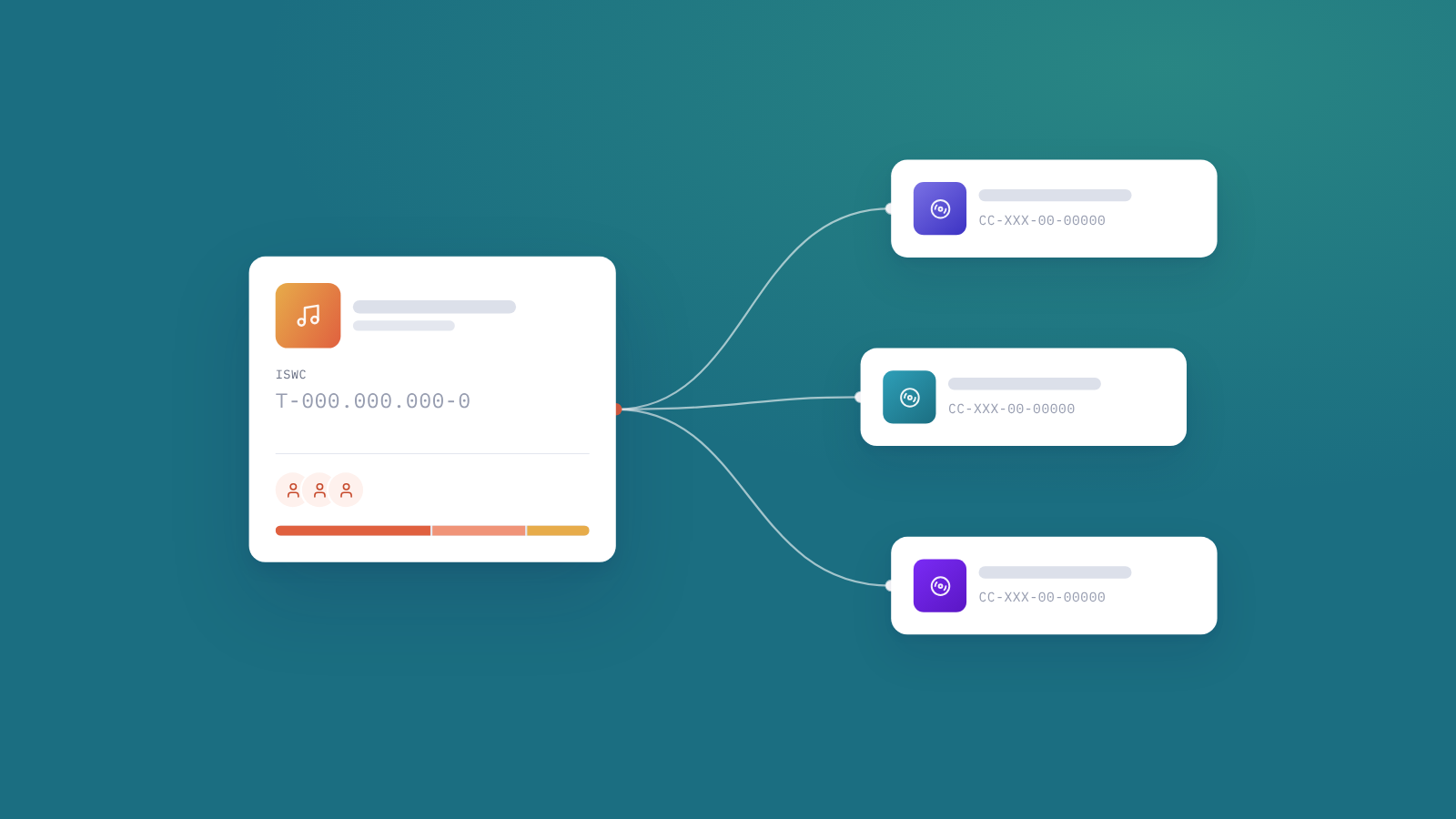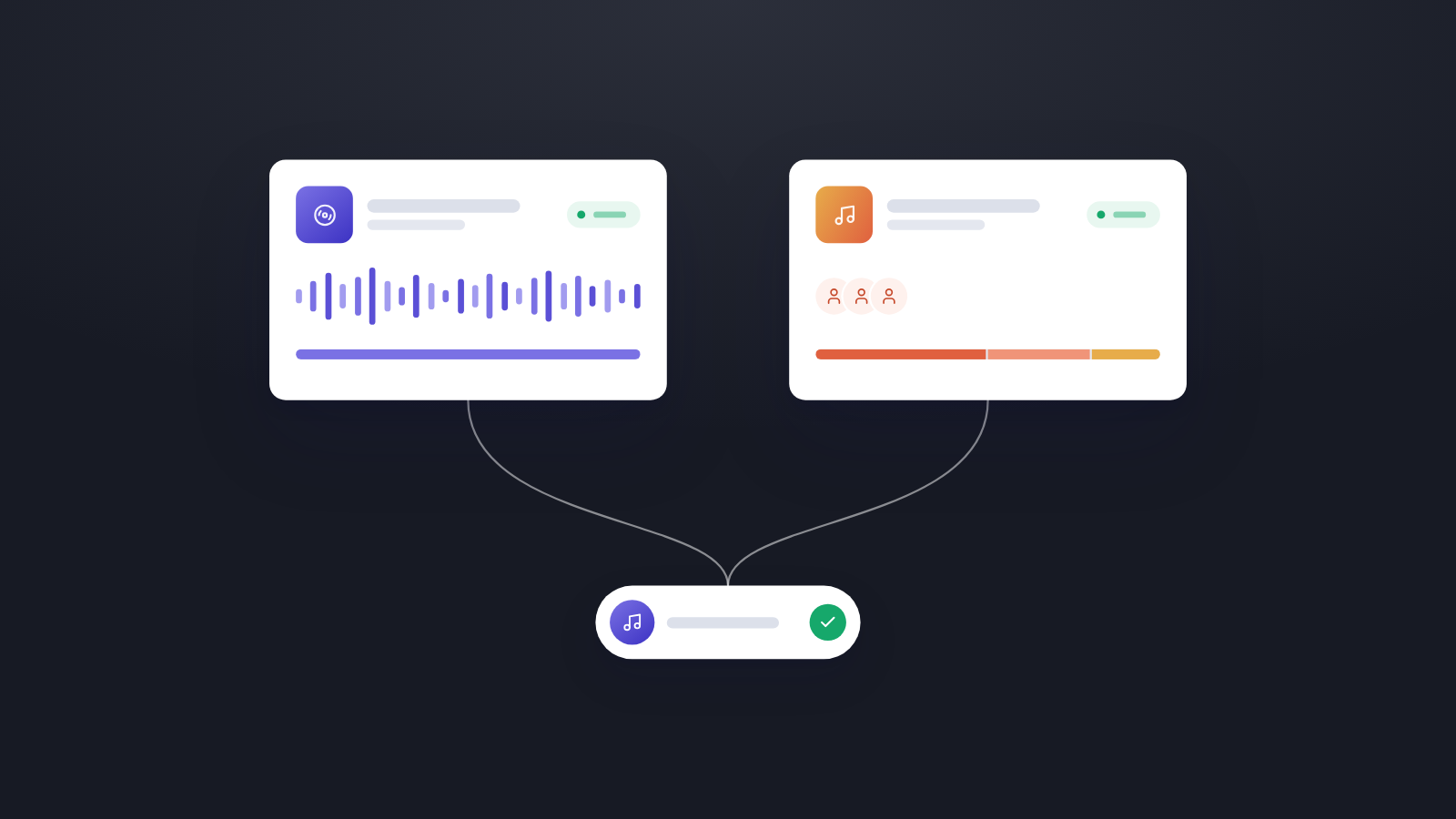
Almost every commercially released song carries two copyrights: the master, which is the specific recording, and the composition, which is the song as written. To use it in picture, you need a master use license from whoever owns the recording and, in practice, a sync license from every publisher that controls a share of the composition.
What's the difference between a master and a composition?
The master is one recording of a song. The composition is the song itself—the music and the lyrics—however many times it's recorded.
The U.S. Copyright Office calls these a sound recording and a musical work. Its explainer on sound recordings and musical works defines a musical work as "a song's underlying composition created by a songwriter or composer along with any accompanying lyrics." It adds that the two "are commonly owned and licensed separately."
Circular 56A, on registering musical compositions and sound recordings, is blunter: "Sound recordings and musical compositions are considered two separate works for copyright purposes."
Who owns each side?
The master belongs to whoever owns the recording. For a label release, that's the label.
The composition starts with its writers, and publishers or administrators control it for them. When a song has several writers, it can have several publishers, and each one controls a share. Those shares are the splits. Co-administration agreements, the Copyright Office notes in a 2016 letter on PRO licensing, "typically provide that each of the parties is entitled to administer only his or her respective share."
Which license covers which side?
| Side | Covers | Usually owned by | License | Identifier |
|---|---|---|---|---|
| Master | This recording | The recording's owner, such as a label | Master use | ISRC |
| Composition | The song as written | Publishers and administrators | Sync | ISWC |
The formal name for a sync license is a synchronization license. The identifier column has its own post: ISRC vs ISWC, and where PROs and IPI numbers fit.
Does a yes on one side clear the song?
No. The two sides are separate copyrights, and each rights holder decides on its own. A label's yes on the master clears nothing on the composition. UMG's licensing request form says it outright: "you will also need permission from the music publisher for use of the composition."
The composition side can take more than one yes, too. In practice, you need a yes from every publisher that controls a share. Kobalt's licensing FAQ says you need "permission from all applicable publishers involved before you have a fully approved composition." Where Kobalt holds less than the whole song, it tells you to find the rest of the publishing and negotiate with those companies directly.
That's practice, not US law. The Copyright Office's letter says a co-owner "may thus grant a nonexclusive license to use the entire work without the consent of other co-owners," provided it pays the others their shares. Publishing agreements typically limit each party to its own share, so in practice you clear every share. Outside the US, the rules can be stricter: the letter notes that many other countries "require the consent of all co-owners for any license."
When does one approval clear both?
When one party controls both the master and the composition. Supervisors call that a one-stop song. One approval can then cover both sides.
What if the production records its own version?
If the new recording is made as a work for hire, you don't need a master use license. You still need a sync license. Bart Day Law's guide to licensing music for films puts it this way: when a producer has a new version recorded as a work for hire, "the producer does not need to obtain a master use license." The producer still needs a sync license from the song's publisher.
A new recording brings its own paperwork. Mark Litwak's guide to obtaining music for a soundtrack notes that it means a deal with "a recording studio, musicians and/or vocalists," and that "re-use payments to musicians and performers will be required if the recording was made by union members."
How is original score cleared?
Through the composer's contract, not through a sync license. Jeffrey and Todd Brabec, writing for ASCAP on music in the movies, say "practically all composer underscore agreements are employee-for-hire or work-made-for-hire agreements." So the producer usually owns the score.
The law allows this for film and TV. The Copyright Office's circular on works made for hire quotes the definition: a work commissioned "as a part of a motion picture or other audiovisual work" counts, "if the parties expressly agree in a written instrument signed by them." When the producer pays the composer's fee up front, the composer usually keeps the writer's share of performance royalties. Some deals share ownership of the score instead.
What should you check before you send quote requests?
- Find the owner of the master.
- Find the owner of each share of the composition. Check that the shares total 100%.
- Check whether one party controls both sides.
- Find who administers each share.
In ClearMyTracks, you record who owns what share of the master and the composition on the song record. It doesn't look them up for you—writers, publishers, and splits come from you.
For the whole clearance process, from quote request to paperwork, read How the music clearance process works, start to finish.
This is general information about US practice, not legal advice.